October 11, 2026
Leather, Steel, Nylon or Silicone: How to Choose the Right Watch Strap Material
From supple leather to rugged steel, nylon, and silicone, this guide compares each watch strap material for comfort, durability, water resistance, maintenance, and style—helping you find the right match for your watch, wrist, and daily routine.
Why Does the Material of Your Watch Strap Matter So Much?
Have you ever bought a watch you loved, only to stop wearing it a month later because the strap itched, sagged or smelled after a gym session? You are far from alone. The case, dial and movement get most of the attention in reviews and ad campaigns, yet the watch strap material decides whether a timepiece feels like a companion or a chore. It touches your skin for twelve hours a day, soaks up sweat, bumps into doors and desks, and quietly sets the tone for your whole outfit. This guide walks through every major option, from supple leather to brushed steel, so you can choose with confidence.
Whether you are shopping for a dress watch, a dive watch or the latest smartwatch, the rules are surprisingly consistent. Each material trades comfort, durability, water resistance, maintenance and style against the others, and no single option wins on every count. Our full range of watch straps & bands spans all of them, which makes it a handy place to compare the real thing while you read. Along the way you will find technical details, a few fascinating facts, honest pros and cons, and practical advice for matching a strap to your wrist and routine.
Before comparing materials, answer these five questions honestly, because they narrow the field faster than any buying guide:
- How many hours a day will the watch be on your wrist, and will it get wet or sweaty?
- Is the watch a dress piece, a daily driver or a sports tool?
- What is the lug width, and does the watch use standard spring bars or a proprietary connector?
- How much maintenance are you happy to do: none, an occasional wipe-down or regular conditioning?
- What is your budget, and do you want a single strap or a small wardrobe?
The strap is the part you actually touch
A movement hides behind a caseback and a sapphire crystal never meets your skin, but the strap is in constant contact. That is why the same watch can feel luxurious on a soft calfskin band and clumsy on a stiff one. Weight distribution matters too: a heavy steel bracelet shifts the balance point of a watch toward the wrist, while a feather-light nylon strap lets a big case sit proud. Thickness, flexibility, edge finishing and even the shape of the keeper loops influence comfort in ways that a spec sheet rarely captures.
Skin chemistry plays a role as well. Sweat, hand cream, sunscreen and summer humidity react differently with every material. Leather soaks up moisture and can darken or stiffen, steel stays inert but can pinch arm hair, and silicone shrugs off water yet can trap heat. Understanding these quirks is the first step toward a strap you will reach for every day instead of leaving in a drawer.
From pocket watch to wrist: a very short history of straps
Early wristwatches in the 1800s were mostly jewellery for women, worn on delicate chains and ribbons. The shift toward practical leather straps came with soldiers who needed to read the time without fishing a pocket watch out of a uniform, and the so-called trench watches of the First World War made the wristwatch respectable for men almost overnight. Leather simply had the right mix of availability, flexibility and affordability, and it stayed the default for decades.
Everything else arrived in waves. Metal bracelets rose with the mid-century sports watch, rubber straps followed the dive-watch boom of the 1960s, and the humble nylon strap owes much of its fame to a 1973 British Ministry of Defence specification, Defence Standard 66-2, which gave the world the famous NATO design. Today smartwatches have pushed things further, bringing quick-release lugs, fluoroelastomer bands and magnetic mesh loops into everyday life.
Leather Watch Straps: Heritage, Character and a Little Patience
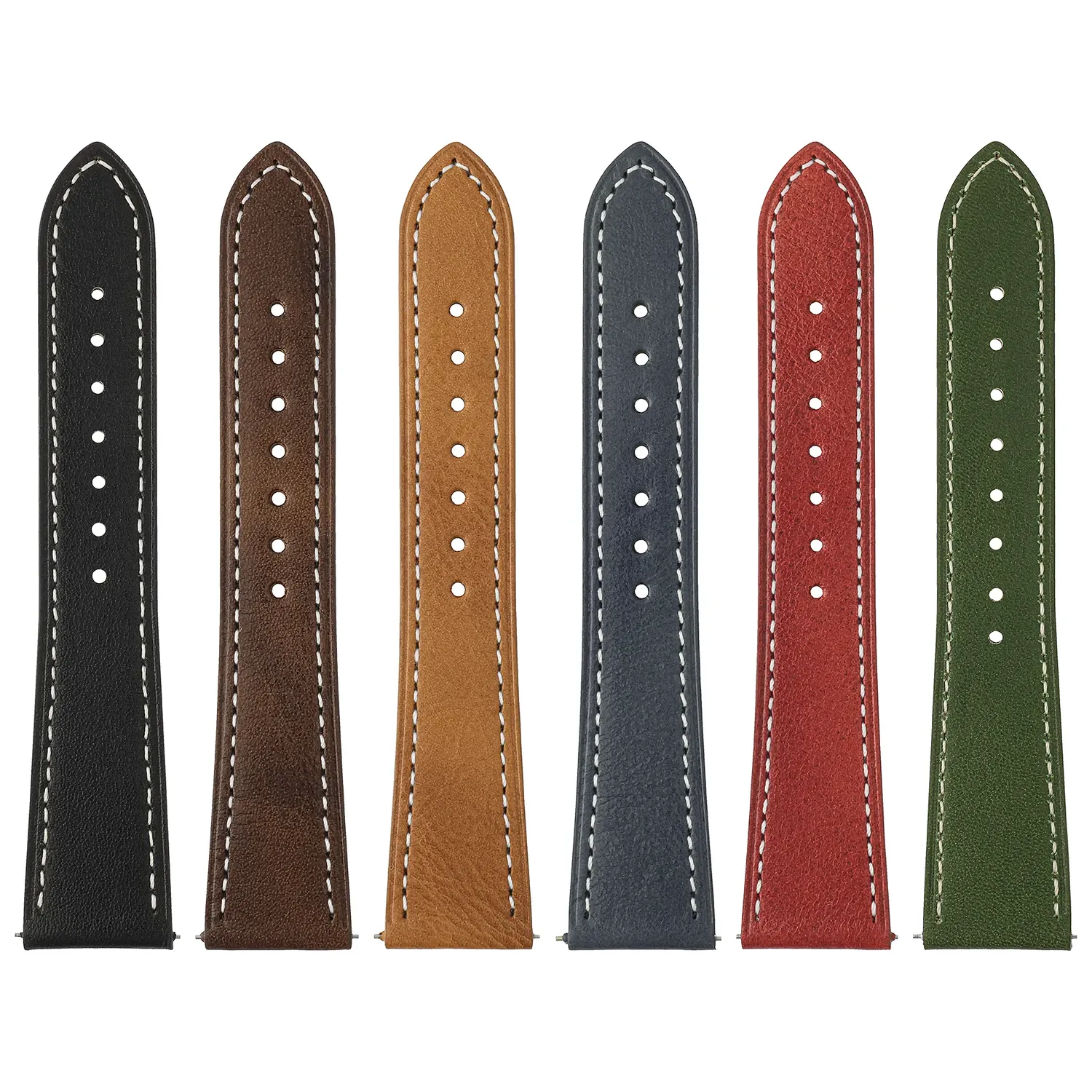
Leather is the strap material most people picture first, and for good reason. A well-made leather band looks right on almost any dial, warms to the shape of your wrist and develops a patina that is unique to you. It also comes in more flavours than most shoppers realise, from smooth calf to textured embossing, from oiled vintage hides to buttery suede. If you are drawn to timeless style, start by browsing the classic watch straps, where the traditional silhouettes live.
Full-grain, suede and perforated: reading the leather
Full-grain leather keeps the strongest outer layer of the hide, which means it resists cracking and ages gracefully. Vegetable-tanned hides, tanned slowly with natural tannins, tend to darken beautifully but need a little more care, while chrome-tanned leather is quicker to produce, softer out of the box and more resistant to moisture. Suede is made from the softer underside of the hide, so it feels velvety and casual but drinks up rain and stains easily. Calfskin sits in the middle: smooth, refined and dressy.
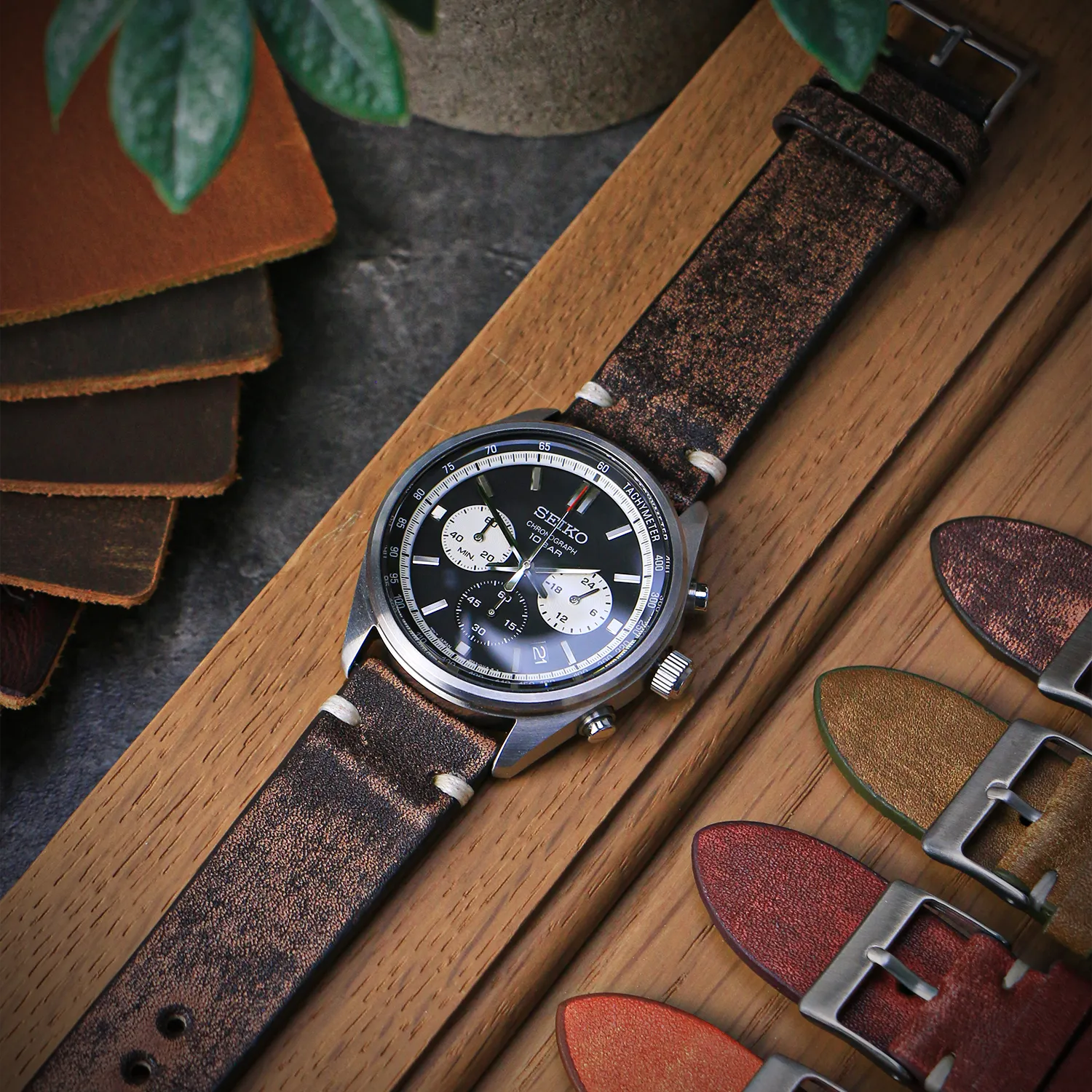
Perforated designs are a category of their own. Those rows of small holes, often said to be inspired by racing gloves, improve airflow and give a sporty look that suits chronographs and field watches. You will find them in the rally watch straps range, and they are a smart pick for warm climates. Vintage washed and hand-stitched finishes, meanwhile, trade polish for personality, giving a worn-in look from the very first day.
Caring for leather so it ages instead of just wearing out
Leather is a natural material, so it responds to how you treat it. Sweat is its biggest enemy, as salt and moisture slowly break down the fibres and cause the lining to crack. Rotating two or three straps, rather than wearing one every single day, gives each one time to dry out and can noticeably extend its life. Most wearers get roughly a year or two of daily wear from a good leather band, and considerably longer from a rotated one.
Simple habits make a visible difference, and a few minutes of attention every couple of weeks is plenty. The routine below covers almost every leather type, except suede, which needs a soft brush instead of a damp cloth:
- Let the strap air dry after a sweaty day instead of leaving it on your wrist overnight.
- Wipe the underside with a slightly damp cloth, and never soak the leather.
- Keep it away from radiators, car dashboards and direct sunlight, which dry out the hide.
- Apply a small amount of leather conditioner once or twice a year and let it absorb fully.
- Take the watch off for swimming, showers and heavy workouts.
- Store straps flat or loosely rolled in a pouch, never folded sharply.
Pairing leather with popular watches
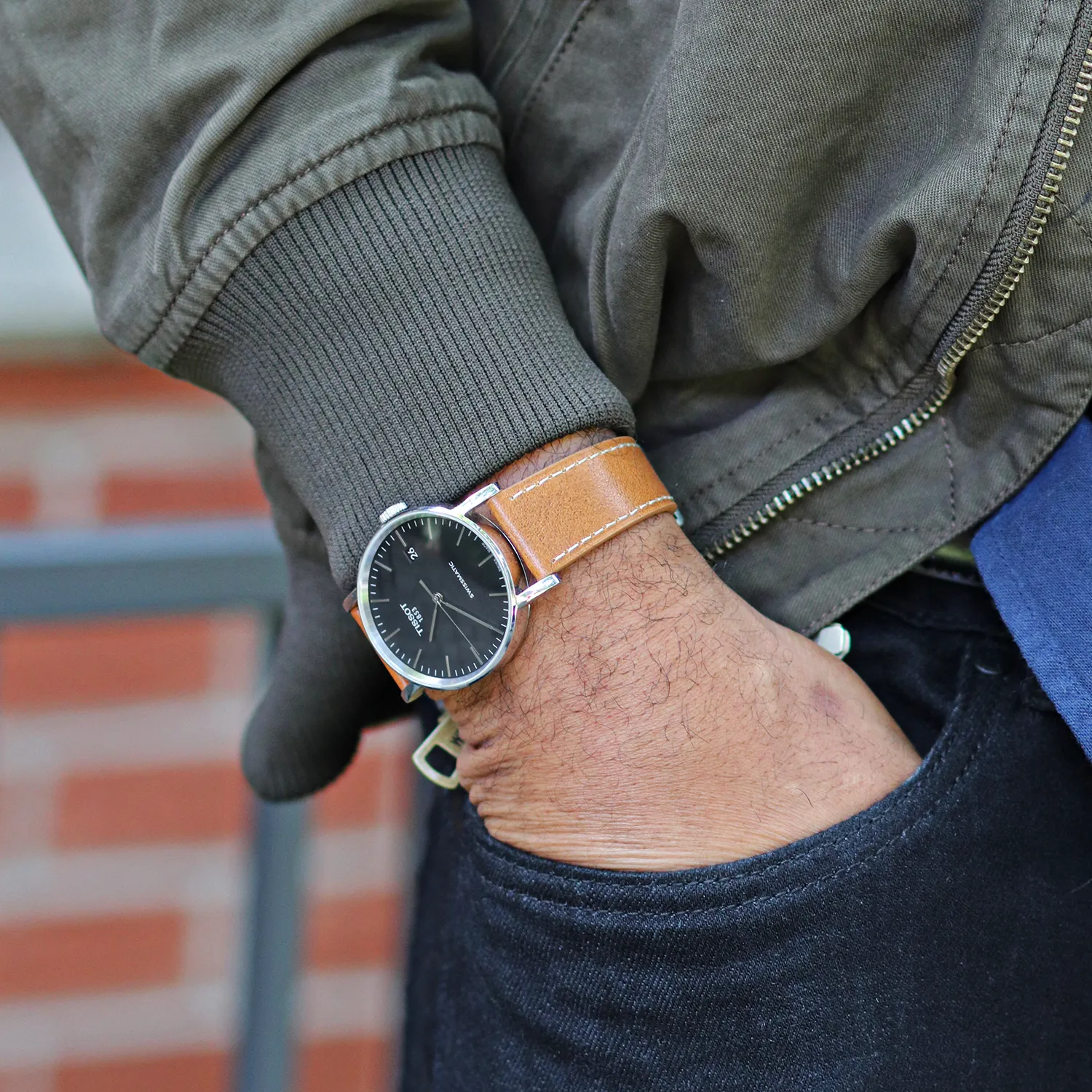
Leather suits the watches that were designed around it. The Omega Speedmaster Professional and its 20 mm lugs look right at home on a brown calfskin strap, the Seiko SKX007 and its 22 mm lugs suit a rugged oiled leather, and the Tudor Black Bay 58, also 20 mm, looks sharp on aged tan or vintage-style hides. Matching the colour of the stitching to the dial details is a small trick that makes a watch look intentional.
Smartwatch owners are not left out. Apple Watch and Galaxy Watch models now accept leather bands in dozens of styles, including hybrid designs that pair a leather surface with a silicone backing for sweat resistance. That hybrid construction is a clever compromise if you want the look of leather during the day and still plan to hit the gym in the evening.
Steel and Mesh Bands: When a Bracelet Beats a Strap
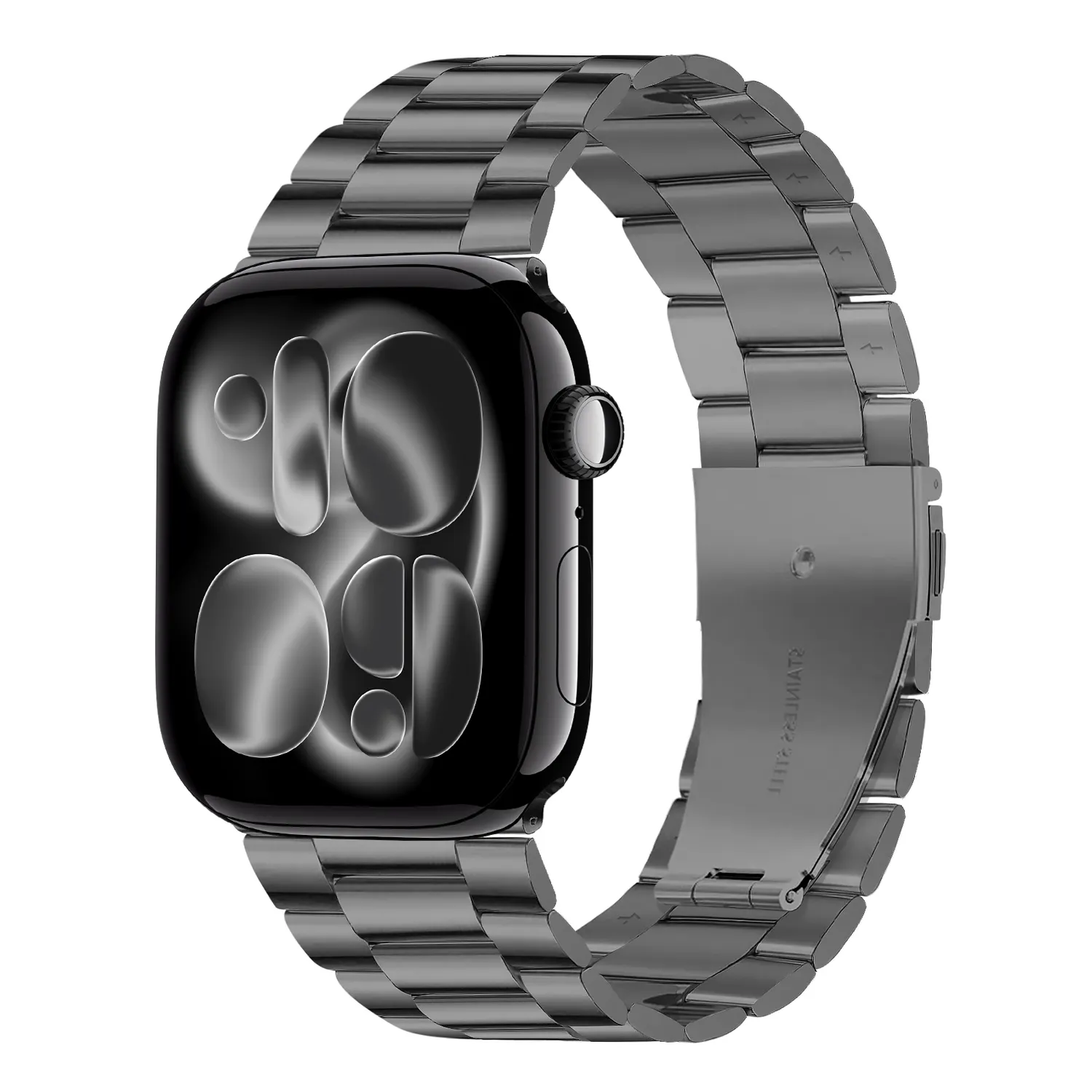
Metal bands answer a different set of priorities. They are sturdy, water-friendly, easy to wipe clean and look the part on everything from a diver to a dress watch. Most quality bracelets are made from 316L stainless steel, an alloy chosen in watchmaking for its resistance to corrosion, although you will also find titanium, gold-tone plating and coloured finishes such as gunmetal and rose gold. The real question is not whether metal is good, but which style fits your wrist and your day.
Link bracelets versus Milanese mesh
A link bracelet is built from individually hinged sections held together by pins or screws. It is rigid in the best way, with a confident weight and a satisfying clasp, and it can be resized by adding or removing links. Mesh works differently: fine woven steel forms a flexible fabric that adjusts almost infinitely with a sliding clasp or a magnet. The Milanese style, a name that nods to Milan, became hugely popular on smartwatches after Apple introduced the Milanese Loop alongside the first Apple Watch in 2015.
Mesh feels softer and drapes over the wrist like cloth, which makes it a great choice for slim wrists and for people who dislike the pinch of link edges. It is also forgiving about sizing. If you wear a Samsung, the mesh band for the Samsung Galaxy Watch 7 shows the idea nicely, offered in silver, black and rose gold finishes to match different cases.
Sizing, links and clasps
Getting a metal band to fit is mostly a matter of patience. Link bracelets are shortened by pushing out a pin or unscrewing a link, and a proper pin pusher or screwdriver turns a stressful job into a five-minute one. The watch removal tools collection covers what you need, including spring bar tools for swapping the whole band. Always remove links evenly from both sides of the clasp so that the clasp sits centred under your wrist.
Clasps deserve attention, too. A butterfly deployant protects the strap from wear and offers a secure, low-profile closure, while a simple folding clasp is cheaper and slimmer. Mesh bands often use sliding or magnetic closures, which make micro-adjustments easy but offer less security if you are very active. Check whether the clasp can be adjusted without tools, because a bracelet that cannot flex a few millimetres on a hot day will feel tight by the afternoon.
Metal bands in the smartwatch era
Smartwatches have given metal bands a second wind. A Galaxy Watch 7 takes standard 20 mm bands, so almost any 20 mm bracelet fits, and Apple Watch owners can choose links, mesh or magnetic loops sized from 38 mm up to 46 mm cases. Metal also pairs nicely with the polished stainless cases of premium models, and it can instantly turn a fitness tracker into a dressier accessory.
There are trade-offs. Metal bands conduct heat and cold, can feel heavy on long runs and tend to clatter against desks. For heart-rate sensing, a snug fit matters more than the material, so mesh and link bands should be tightened a notch during workouts. For office days, dinners and travel, though, steel is hard to beat.
Silicone, Rubber and Nylon: Built for Sweat, Salt Water and Sprints
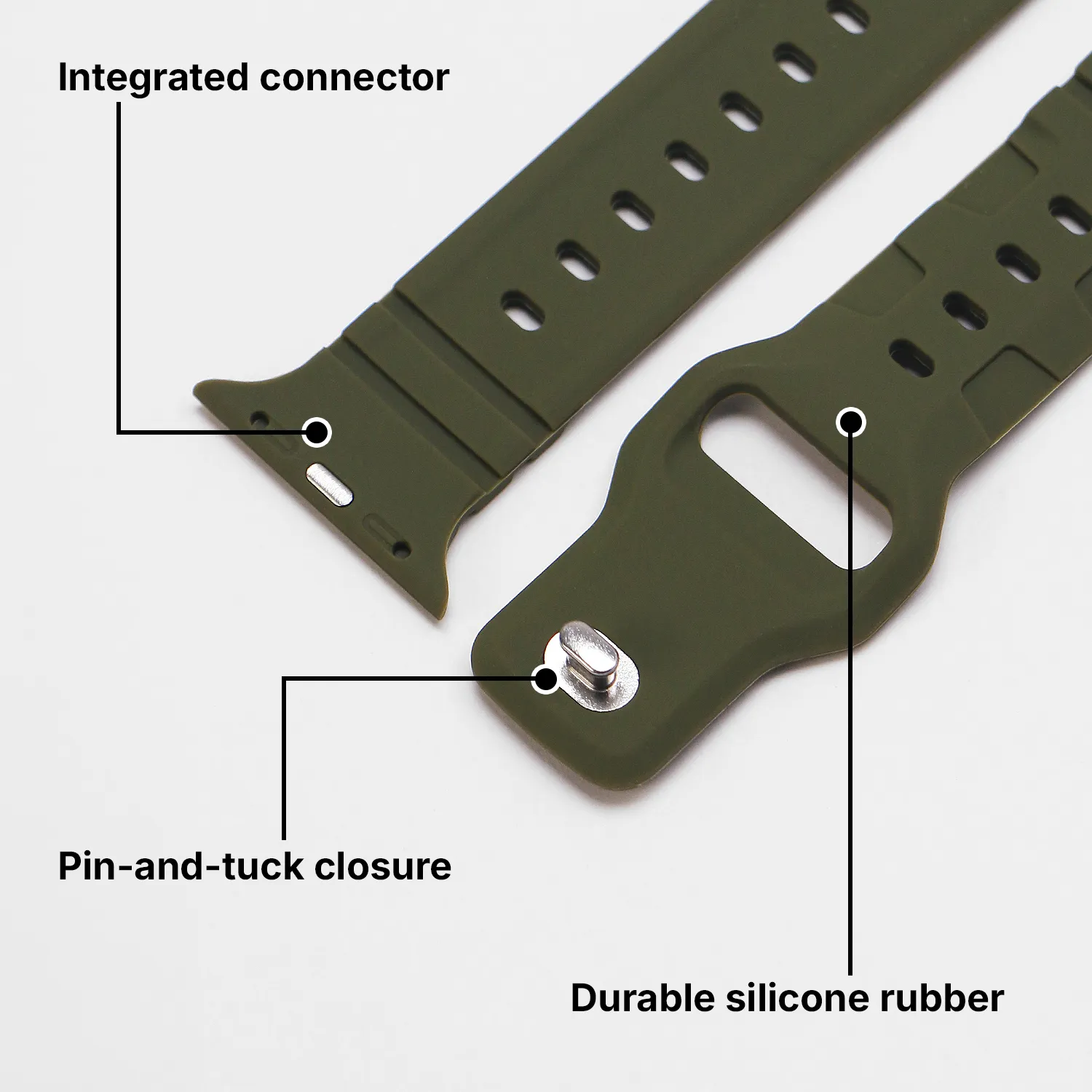
If your watch lives a hard life, softer synthetics are probably your best friends. Silicone, fluoroelastomer and nylon shrug off sweat, rain, pool water and the occasional knock, and they weigh next to nothing. They are also the cheapest way to refresh a watch: a fresh sport band in a bright colour costs less than a decent lunch and transforms the look entirely. Browse the full range of smart watch bands and you will see how many variations exist, from ribbed to woven to textured.
Why silicone and fluoroelastomer dominate sport watches
Silicone is soft, flexible, gentle on most skin and available in almost any colour. Fluoroelastomer, often shortened to FKM, is a more premium rubber with better resistance to UV light, oils and chemicals, and Apple’s own Sport Band is made from it. Both materials handle sweat easily, rinse clean under a tap and dry fast, which makes them ideal for gym sessions, runs, swims and long hikes.
Garmin wearers will recognise the logic behind QuickFit bands, which come in 20, 22 and 26 mm widths: the Fenix 7S uses 20 mm, the Fenix 7 uses 22 mm and the Fenix 7X uses 26 mm. For anyone who spends time in the water, the waterproof watch straps selection is the sensible place to start, because it filters out materials that will not enjoy a swim.
NATO and one-piece nylon straps explained
The classic military-issue NATO strap is a single length of woven nylon that passes behind the watch, under both spring bars and back out the other side. The big advantage is safety: if a spring bar snaps, the watch stays trapped on the strap and on your wrist instead of falling away. The design is often traced to that 1973 British Ministry of Defence specification, and the standard military version was a plain 20 mm width.
Modern one-piece watch straps keep that clever design and add colours, patterns and finishes that range from sober olive to playful stripes. Variants with thicker hardware, often called Zulu straps, suit chunky dive watches. Nylon dries quickly, is hard to damage and is easy to swap, though the extra layer of fabric under the watch raises it on the wrist, which can matter on slim dress watches.
Why quick-release lugs changed the strap game
Quick-release spring bars have a small lever or slider so you can swap straps in seconds, without a tool and without scratching the lugs. Samsung, Garmin and Apple all use some form of quick-release or slide-in system, which has turned strap changing from a chore into a habit. Many people now own a sport band for mornings, a mesh for the office and a leather strap for evenings.
If your watch uses ordinary spring bars, you can still get the same convenience. Our quick release watch straps come with built-in levers, so a standard watch can switch bands as easily as a smartwatch. It is a small upgrade that makes the biggest difference for anyone who likes to change style with the occasion. Changing a standard spring-bar strap is straightforward when you follow these steps:
- Lay the watch face down on a soft cloth to protect the crystal.
- Slide the flat tip of a spring bar tool between the strap and the lug, and press the bar toward the strap to release one end.
- Pull the old strap free and repeat on the other side.
- Fit the spring bar into the new strap, compressing one end into the lug hole first.
- Pop the opposite end into its hole, then tug the strap gently to confirm both ends are seated.
- Check that the strap moves freely and that the watch sits centred before you wear it.
Pros and Cons: Which Strap Material Wins for Your Wrist?
After all that detail, it helps to see the trade-offs side by side. No material is perfect, and the best choice depends on how you wear your watch, so treat the table and lists below as a starting point for your own priorities rather than a final verdict.
| Material | Comfort | Water resistance | Durability | Upkeep | Best for |
|---|---|---|---|---|---|
| Calfskin leather | High once broken in | Low | Moderate | Regular wiping and conditioning | Dress watches, office |
| Suede | Very soft | Very low | Lower | Soft brush, keep dry | Casual, dry-weather wear |
| Steel link bracelet | Medium, heavier | High | Very high | Occasional wipe-down | Daily wear, work, travel |
| Milanese mesh | High, drapes like cloth | High | High | Keep clean and free of debris | Slim wrists, smartwatches |
| Silicone / fluoroelastomer | High, flexible | Very high | High, can age with UV and oils | Rinse with fresh water | Gym, swimming, outdoors |
| Nylon / NATO | Light, breathable | High, dries quickly | High | Rinse and air dry | Casual, field and dive-style watches |
Leather and suede
Leather rewards people who enjoy a little ritual and a lot of character. It is the best-looking option for formal dress, it breaks in to your wrist and it offers endless variety. Here is what you gain:
- Elegant and versatile, from boardroom to weekend.
- Comfortable and breathable once broken in.
- Develops a unique patina over time.
- Huge range of colours, textures and stitching.
- Instantly dresses up a plain watch.
And here is what you give up:
- Absorbs sweat and water, so it needs care.
- Wears out sooner than metal or silicone.
- Light colours can stain and darken.
- Not ideal for swimming or intense workouts.
Compared with steel, leather is lighter and friendlier to the skin but far less forgiving of water. Compared with silicone, it looks better in a suit and worse in a swimming pool. If your watch rarely gets wet, it is hard to beat.
Steel and mesh
Steel is the durable choice, built to last for years and designed to survive almost anything a typical day can throw at it. Here is what you gain:
- Extremely durable and scratch-resistant for daily use.
- Water-friendly and easy to wipe clean.
- Dressy or sporty depending on the finish.
- Adjustable through links or a sliding mesh clasp.
- Pairs well with polished and brushed cases.
And here is what you give up:
- Heavier than leather, silicone or nylon.
- Can pinch arm hair or clatter on desks.
- Gets hot in summer and cold in winter.
- Link resizing needs a few simple tools.
Against leather, steel lasts longer and cares less about moisture, but it never softens to your wrist. Against silicone, it looks richer but feels heavier and is less comfortable to sleep or exercise in. It suits the person who wants one dependable band for work, travel and weekends.
Silicone, rubber and nylon
Synthetic straps are the workhorses of the strap world, and their strengths are mostly about convenience and resilience. Here is what you gain:
- Waterproof and sweat-proof.
- Lightweight and comfortable for exercise.
- Inexpensive, so swapping is guilt-free.
- Easy to rinse clean.
- Huge colour range, plus the safety of a NATO-style design.
And here is what you give up:
- Looks less formal than leather or steel.
- Can attract dust and lint.
- Silicone may degrade with UV and oils over the years.
- Can trap heat and irritate sensitive skin.
Compared with leather, synthetics dry faster, cost less and ignore sweat, but they rarely suit formal outfits. Compared with steel, they are lighter and warmer on the skin, though they cannot match the same sense of luxury. For active lives they are the clear winner; for evenings out they are a supporting act.
Matching Straps to Your Wrist, Routine and Budget
Choosing between materials is only half of the puzzle. The other half is getting the right size, and that starts with lug width, the distance in millimetres between your watch’s lugs where the strap attaches. Measure it with a ruler or check the manual, because a 20 mm strap on a 22 mm watch will look wrong and slip out of the lugs. Men’s and women’s styles often differ in length and width more than in material, so browsing by wrist size can be just as useful as browsing by style.
| Situation | Recommended material | Why it works |
|---|---|---|
| Office and formal dinners | Calfskin leather or fine mesh | Refined look that suits a suit or dress shirt |
| Gym and running | Silicone or fluoroelastomer | Shrugs off sweat and rinses clean |
| Swimming and beach days | Silicone, fluoroelastomer or nylon | Tolerates water and dries fast; avoid leather |
| Hiking and outdoors | Nylon or silicone | Light, tough and easy to clean |
| Travel | Steel link bracelet or mesh | Durable and smart enough for any occasion |
| Hot, humid weather | Perforated leather or nylon | Airflow and quick drying |
| Sleep tracking | Soft silicone or lightweight nylon | Light and flexible enough to forget overnight |
Measuring your lug width and wrist
Place a ruler between the inner edges of the lugs, measure the gap and round it to the nearest even number, since most straps come in 18, 20, 22 or 24 mm widths. Then wrap a flexible tape measure around your wrist just behind the wrist bone to find your circumference; a strap that is too short will dig in, and one that is too long will flop around. Smartwatch owners have it even easier, because bands are labelled by case size, from 38 mm up to 46 mm for Apple Watch.
These popular models make handy reference points when you are shopping:
| Watch | Lug width | Strap styles that suit it |
|---|---|---|
| Casio F-91W | 18 mm | Resin, nylon |
| Seiko SKX007 | 22 mm | Leather, NATO, rubber |
| Omega Speedmaster Professional | 20 mm | Leather, steel bracelet |
| Tudor Black Bay 58 | 20 mm | Leather, NATO, steel |
| Garmin Fenix 7 | 22 mm (QuickFit 22) | Silicone, nylon |
| Samsung Galaxy Watch 7 | 20 mm | Silicone, mesh, leather hybrid |
| Apple Watch | Sized by case, 38 mm to 46 mm | Silicone, mesh, leather |
Always confirm the figure against your own watch before ordering, since different case sizes within the same family can use different widths.
Building a small strap wardrobe
Most enthusiasts end up with a handful of straps, and that is the most economical way to enjoy a single watch in several moods. A sensible starter trio is a brown leather strap for dress and weekends, a metal or mesh bracelet for work, and a silicone or nylon option for sport and travel. Together they cover almost every occasion without needing a second watch.
Storage matters once you start building a collection. Tangled straps scratch one another, and leather left squashed in a drawer can crease. A few watch storage options such as rolls, pouches and trays keep every band in good condition and make it easier to choose your look in the morning. Buy the best you can afford for the strap you wear most, and have fun with inexpensive alternatives for the rest.
The best strap is ultimately the one you forget you are wearing, until someone compliments it. Start with how you live, pick the material that fits, and your watch will feel brand new again.